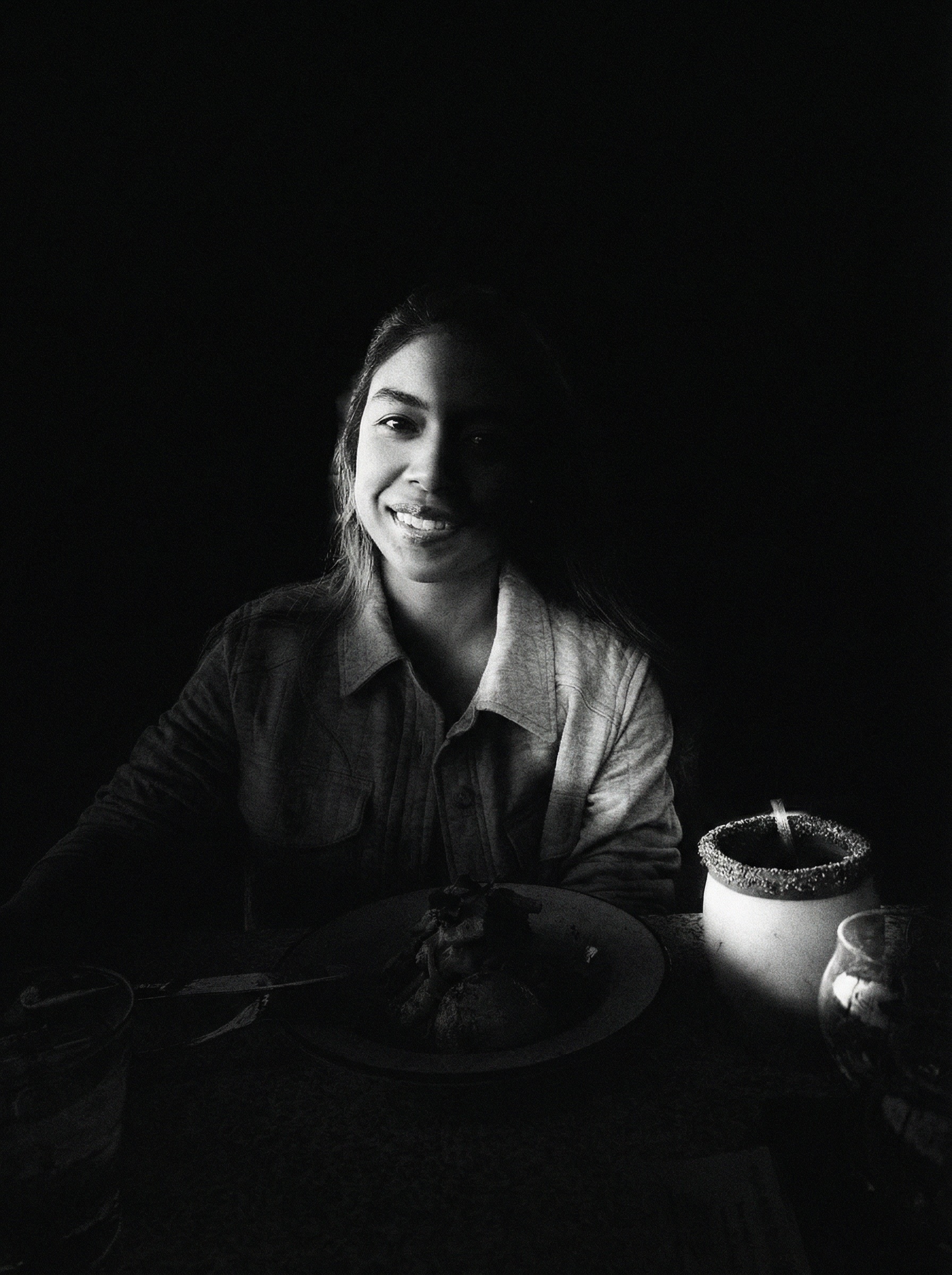
The Rachels

Psychological Evaluation — Patient R.
"The patient does not have multiple personalities. She has multiple women. There is a clinical difference, though I confess I can no longer articulate it."
↓ Begin evaluation ↓
Clinical Assessment No. 2026-0228 — Confidential

Patient R. was referred to this office following an incident on the evening of February 28th, 2026, in which her domestic partner — hereafter referred to as P. — produced what he described as "a diagram." A mind map. Of her personalities. On lined notebook paper. With color coding.

When asked how he saw her, P. did not say "beautiful" or "complicated" or any of the safe words a man in a relationship learns to deploy. He drew a chart. With branches. Seven of them. She asked for honesty and he delivered a dissertation.

What follows is my clinical assessment of each identified persona, compiled over the course of one session, two coffees, and one very long sigh.

CLINICIAN'S NOTE:
Patient R. does not "shift" between states.
She doesn't transition. She replaces.
One persona exits. Another enters. No handoff.
Same body. Same voice. Entirely different tenant.
I have not seen this before. My textbooks have not seen this before.
My textbooks are asking to be returned.
— Dr. M., Behavioral Psychology Dept.
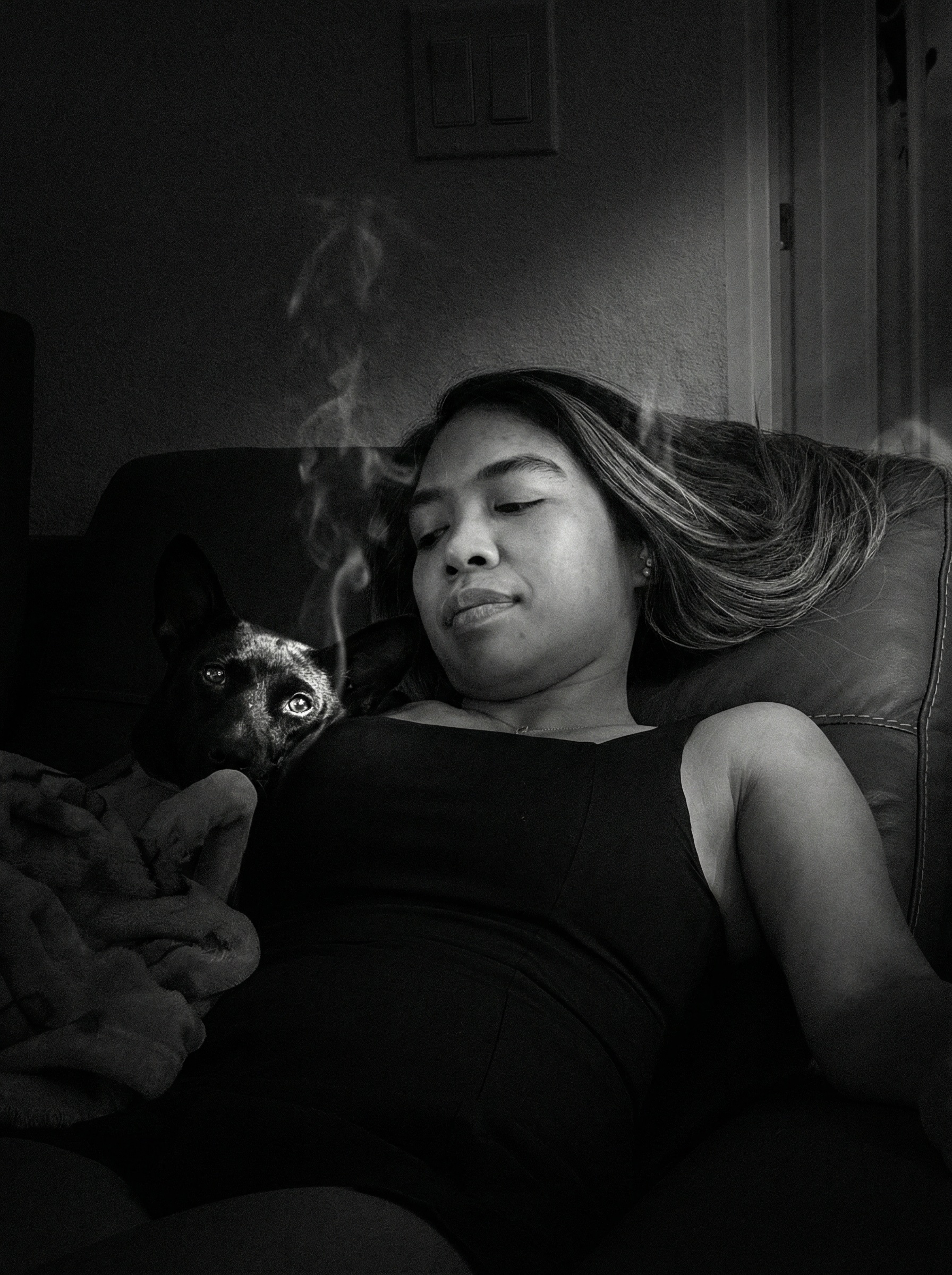
Patient R. — Persona 1: Loving & Cuddly
Fig. 1 — Observed at rest
Persona I

Loving, Cuddly

Classification: "The Honeytrap"

This persona presents as warm, attentive, and physically affectionate. She makes sustained eye contact. She touches his arm. She says things that make a grown man believe the world is fundamentally good and that he specifically is the reason.

Clinically speaking, she is devastatingly effective. P. reports that this persona is responsible for approximately 100% of the reason he is still in the relationship and approximately 0% of his average Tuesday.

She manifests exclusively in the evening hours, typically after wine. By morning she has been replaced — not gradually, not with warning — but completely, as if she were never there. P. describes this as "emotional whiplash." I have upgraded his diagnosis to "emotional hit-and-run."

ONSET: Evenings, post-wine. Duration: 2-4 hours.
PROGNOSIS: Patient will continue to chase this persona indefinitely.
CLINICAL OPINION: This is the bait. It is excellent bait.
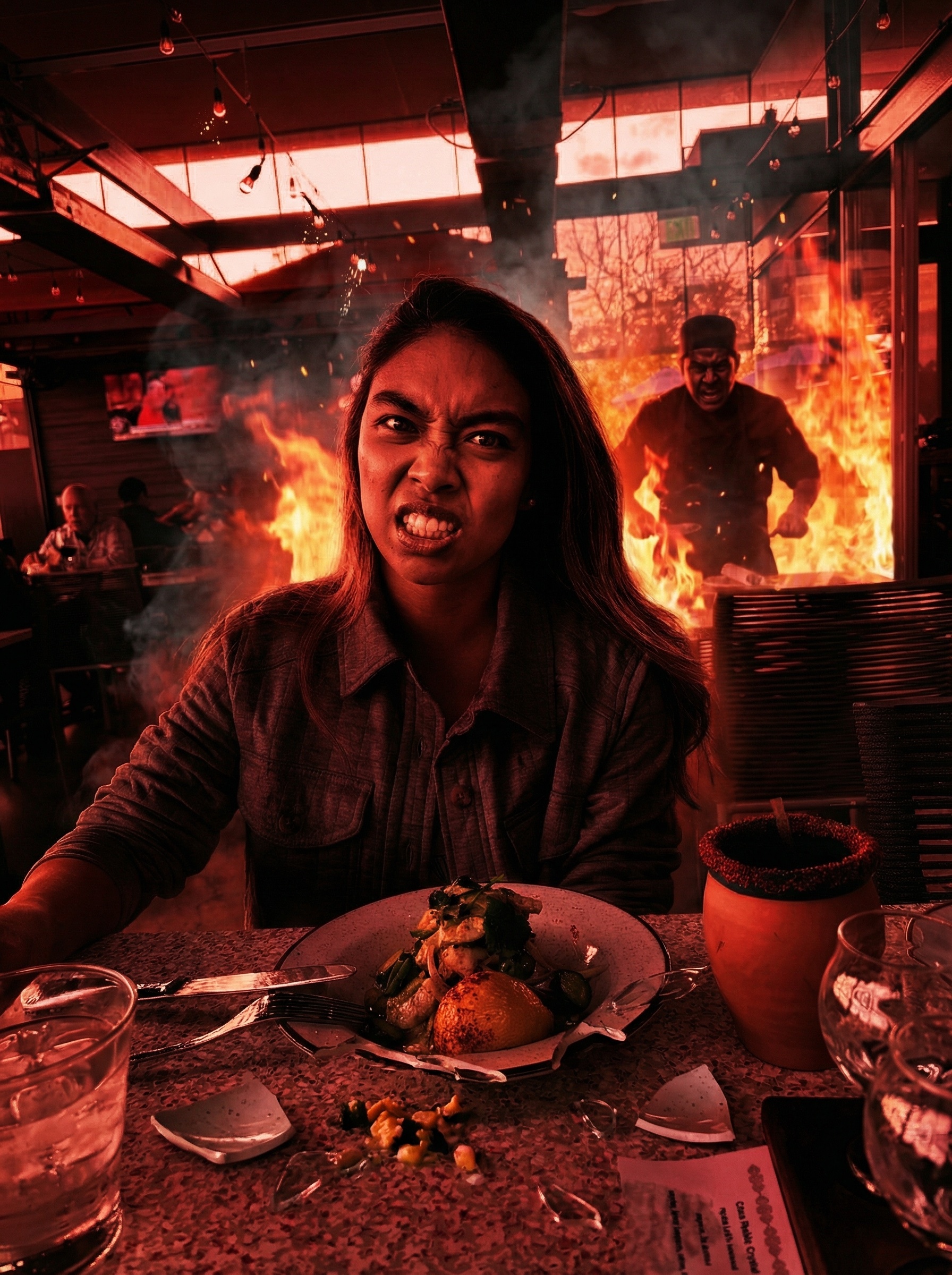
Patient R. — Persona 2: Rage Chel
Fig. 2 — Incident report 03/14
Persona II

Rage Chel

Classification: "Disproportionate Response Syndrome"

This persona activates without discernible trigger. P. reports that breathing, existing, and being within a 30-foot radius have all served as catalysts. The clinical term for this is "you were going to get yelled at no matter what."

Rage Chel does not argue. She prosecutes. Every misstep P. has committed since roughly 2019 has been catalogued, cross-referenced, and loaded into a verbal cannon that fires in all directions simultaneously. The collateral damage is impressive.

She constructs a version of P. composed entirely of his worst moments and argues with that man instead of the one standing in front of her holding a spatula, wondering what happened to dinner and also to his sense of self.

TRIGGER: Unknown. Possibly atmospheric pressure.
DURATION: Until the ammunition runs out. It does not run out.
RECOMMENDATION: Maintain safe distance. Do not engage. Do not hold spatula.
Patient R. — Persona 3: Uppity Rachel
Fig. 3 — Behavioral observation
Persona III

Uppity Rachel

Classification: "Superiority Complex with Receipts"

This persona is, by most objective measures, correct. The bills are overdue. The dishes are growing sentient. The dog does need to go to the vet. She is right about all of it, and she will make sure you understand this at a volume and cadence typically reserved for sentencing hearings.

The clinical issue is not her competence — it is her delivery system. She dispenses truth like a judge handing down consecutive life sentences. There is no warmth. There is no "we'll figure it out together." There is only the verdict and the disappointed head shake.

P. reports feeling "like an intern who showed up on the wrong floor." I have noted this in his file as well. Both patients are deteriorating, though only one of them knows it.

FREQUENCY: Weekday mornings, bill due dates, any day ending in Y.
ACCURACY: Disturbingly high.
BEDSIDE MANNER: Nonexistent. Would make an excellent IRS auditor.
Patient R. — Persona 4: Dead Inside
Fig. 4 — Tuesday, 3:22 PM
Persona IV

Dead Inside

Classification: "Selective Consciousness"

This is the persona that worries me the most, professionally. Not because she's dangerous — she's the opposite. She's nothing. She's a couch cushion with a pulse.

Patient R. becomes unresponsive. Not catatonic — she can technically hear you — but the signal goes in and nothing comes out. The dog presses against her side like a small, furry defibrillator. It does not work. Nothing works. She is not sad. She is not angry. She has simply clocked out of being a person and left no forwarding address.

P. retreats to video games, which she resents despite being functionally absent. The silence has rules, P. reports. He does not know the rules. I do not know the rules. I am beginning to suspect the rules are generated randomly.

She attributes this state to Adderall, or the absence of Adderall, or the concept of Adderall. The pharmacological narrative shifts depending on which persona is providing the history.

ONSET: Unpredictable. Duration: Hours to days.
RESPONSIVENESS: Minimal. Dog: Trying its best.
CLINICAL NOTE: I have observed more emotional range in my office fern.
February 28, 2026 — 11:42 PM I asked Paul how he sees me tonight. I thought he'd say something sweet. Something simple. "You're funny." "You're beautiful." "You're my girlfriend."

Instead he pulled out a diagram. Like a psychiatrist with a whiteboard. Categories and subcategories. He named them — every version of me — like they were patients in a ward.

The worst part isn't that he's wrong.

The worst part is that I recognized every single one of them. And I don't know which one is writing this.

If anyone from the institute is reading this: she's the sane one. Probably.
Patient R. — Persona 5: Fun Rachel
Fig. 5 — Saturday, 1:14 AM
Persona V

Fun Rachel

Classification: "Spontaneous Euphoria — Unmedicated"

This persona dances. Not the cautious, self-aware shuffle of a person at a party — she dances. Full body. No calculation. She is proud of every inch of herself and she wants the room to know it, submit to it, and probably applaud.

Fun Rachel is the version all the other personas quietly wish they could sustain. She is magnetic, uninhibited, and impossible to summon on demand. I have attempted clinical recreation through environmental stimuli (music, lighting, compliments). It does not work. She arrives when she wants and she leaves when she's done. She has her own schedule and it is not on file.

P. describes these episodes as "the best hours of the relationship." I have noted the use of "hours" rather than "days" or "weeks." This is not lost on either of us.

FREQUENCY: Rare. Non-reproducible in clinical settings.
DURATION: 2-6 hours. Felt longer. Wasn't.
WARNING: Do not confuse with Rachelle (Persona VII). Similar presentation. Wildly different prognosis.
Patient R. — Persona 6: Journal Rachel
Fig. 6 — The documentation
Persona VI

Journal Rachel

Classification: "Pathological Archivist"

This persona writes everything down. Every perceived slight. Every silence that lasted too long. Every time P. checked his phone while she was mid-sentence. She is building a case — not for therapy, not for self-improvement — but for prosecution.

The journal is not a diary. It is a weapon with a leather cover. It contains a meticulously one-sided account of the relationship, curated with the editorial rigor of a state prosecutor and the objectivity of a sports parent.

Responsibility, in the journal's universe, is a concept that applies exclusively to other people. The journal is always right. The journal is never sorry. The journal would like you to know that on March 3rd, 2024 at approximately 8:47 PM, you sighed, and it has been noted.

Once this persona activates, she does not transition out. She must leave on her own terms. Attempts to accelerate this process are logged in the journal as further evidence.

PERSISTENCE: Extremely high. Self-reinforcing feedback loop.
DOCUMENTATION STYLE: Weaponized.
CLINICAL NOTE: I asked to read the journal. She said no. I respect this. I also fear it.
Patient R. — Persona 7: Rachelle
Fig. 7 — Last call
Persona VII

Rachelle

Classification: "Full Cognitive Vacancy"

Rachelle is not Rachel after a few drinks. Rachelle is what happens when all seven tenants vacate the building simultaneously and leave the body running on emergency power.

Higher cognitive function has been suspended. Cause and effect have been divorced. Impulse control has filed for bankruptcy. What remains is a human being operating on pure stimulus-response with no executive oversight — a toddler with a credit card, car keys, and an Instagram account.

P. describes Rachelle's emergence as "the point of no return." I asked him to elaborate. He said, "You know how in movies there's always a moment where someone says 'we need to leave right now'? It's that, except she's already ordered another round."

The recommended protocol upon Rachelle's emergence is immediate containment: home, water, horizontal. Do not attempt reasoning. There is no one home to reason with.

TRIGGER: Alcohol + any of the other six personas having a bad day.
COGNITIVE STATUS: Lights on, nobody home, doors unlocked.
SAFETY ASSESSMENT: She is a danger to herself, P.'s credit score, and the Uber rating.

Assessment: Inconclusive

Patient R. does not have a disorder. Patient R. is a disorder — a rotating cast of seven women who share one body, one name, one dog, and one increasingly bewildered domestic partner.

P. drew the map because he needed to understand. Patient R. asked the question because she needed confirmation. Neither party received what they were looking for. This is, I believe, the foundation of their entire relationship.

I am recommending continued observation. Not because I believe treatment will resolve the condition, but because I have never encountered anything like this and my professional curiosity has overridden my clinical judgment. I am aware this is a problem. I have noted it in my own file.

The patient is not broken. She is seven different kinds of whole. The question is whether one man can love all of them at once, and whether any of them will let him.

End of assessment — Patient file sealed — Do not distribute